About
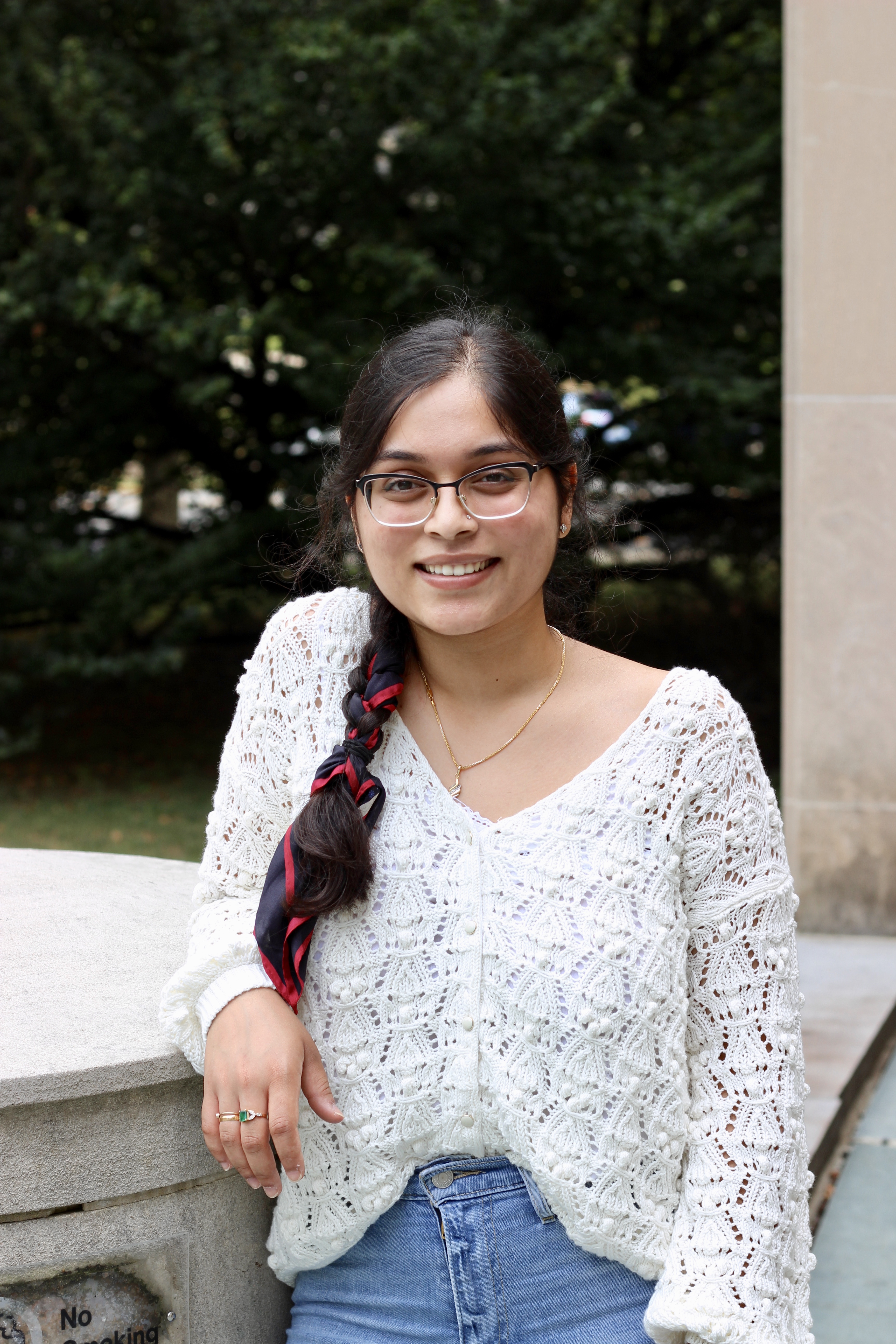
As a scientist…
Hi, I’m Janvi! I’m a computational astrophysicist interested in how the environments in which galaxies form shape their evolution across cosmic time. I recently completed my PhD in Astrophysics at Johns Hopkins University, where I worked with Dr. Charlotte Welker at CUNY and Dr. Colin Norman at JHU. I have found my scientific home in the Gotham Web Lab, an incredible community of observers and theorists studying galaxy evolution and the cosmic web across a wide range of scales.
My PhD research focused on the evolving gaseous cosmic web, the vast network of gas filaments that transport matter, energy, and angular momentum through the Universe. Using high-resolution cosmological hydrodynamic simulations, I developed computational and statistical methods to reconstruct these structures on nonlinear scales and investigate how their gas dynamics influence the assembly of galaxies and their satellites.
In particular, my work traces how coherent gas flows, vortical motions, and the evolution and merging of cosmic filaments give rise to anisotropic distributions of satellite galaxies. These results provide a physically motivated explanation for the long-standing “planes of satellites” tension with the standard ΛCDM cosmological model, showing that seemingly anomalous satellite configurations can emerge naturally from the larger gaseous environments in which galaxies assemble.
More broadly, I’m interested in using computation to uncover the physical connections between phenomena operating across enormous scales, from the dynamics of individual dwarf galaxies to the evolution of the cosmic web.
Towards a new world…
I am interested in social movements broadly and organizing and building movements that center dignity and care. Most of my free time is spent organizing in my community and workplace. I deeply believe in anchoring into a collective practice of taking care of each other in a politics of interdependence. Putting care at the center of our relationships with each other and the natural world, I am driven to organize against the exploitation of our labor, the extraction of resources, and all systems that prioritize profit over people and the planet from an anti-imperialist and abolitionist framework.
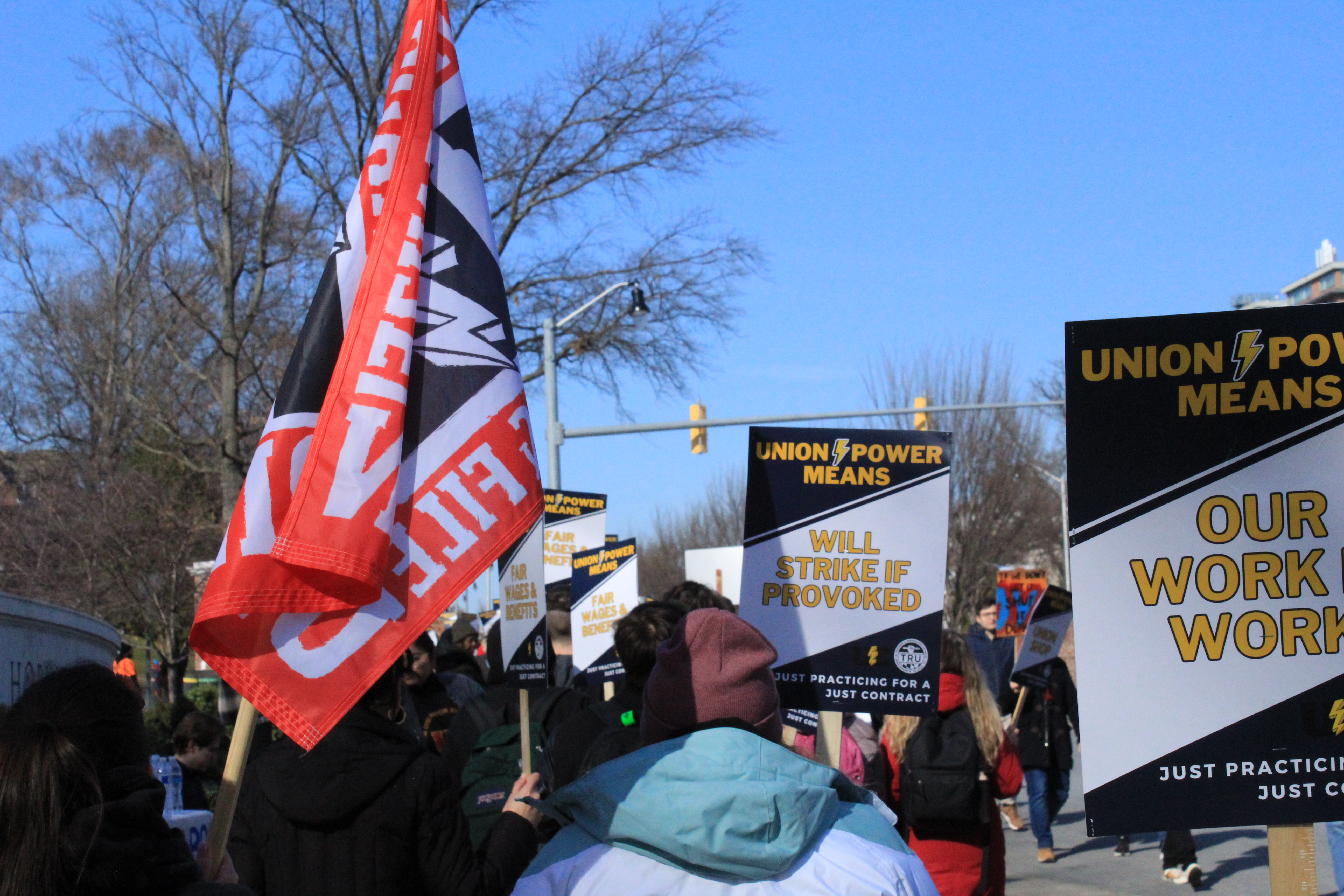 Graduate workers in TRU-UE 197 on the picket line at Johns Hopkins. Baltimore, MD. February 20, 2024.
I, along with hundreds of others, helped build the graduate worker union, Teachers and Researchers United, UE Local 197, at Johns Hopkins. From winning our union recognition campaign to bargaining our very first contract to seeing it through to its current formation, we built TRU to be a strong, member-led union. Our union builds collective power from the grassroots and fights not only for workplace rights locally, but with the recognition that our labor is part of a much larger, internationalist geography and our struggles are materially linked. Being part of the rising tide of graduate labor has been a transformative experience in my life. You can read some of my reflections about the role of organized grad labor in the current political moment in this roundtable interview.
As a labor organizer in Baltimore, I have grappled with how the wage relationship between my coworkers and Johns Hopkins University connects our workplace to broader patterns of organized abandonment, incarceration, and policing of Black communities across the city. Much of my life outside of science has been spent organizing alongside my neighbors and workers across unions to build grassroots power and a labor coalition against the privatized expansion of armed policing in our streets.
Over time, I have come to see the boundary between my life as a scientist and my political commitments as an increasingly artificial one. Organizing has made me think more seriously about what my scientific training is for, whose questions our technical skills are used to answer, where the products of our scientific labor go, and who they are made to serve. I began to ask how the tools I had spent years developing as a computational scientist (programming, data analysis, modeling, multi-scale analyses) might also be put in service of communities confronting state violence.
I take particular inspiration from the work of abolitionist geographer Ruth Wilson Gilmore, and for the past several years, have been working to apply my programming and data analysis skills at the intersection of critical geography and grassroots movement building.
My friend and I are working on publishing a critical geography project to map Baltimore, understand the networks of power, control, resistance, and struggle that run through our geography, and ultimately, to build a collective imagination for what infrastructure could be built to make freedom a place. I hope to share it here soon!
I am committed to struggling for a world that I know is possible for us to build, one that I am positioned to help construct as a scientist, and one that I am committed to constructing both within and without the academy.
I return to these words from Marxist historian, Mike Davis, often, and I leave them here for you as well:
“Fight with hope, fight without hope, but fight absolutely.”
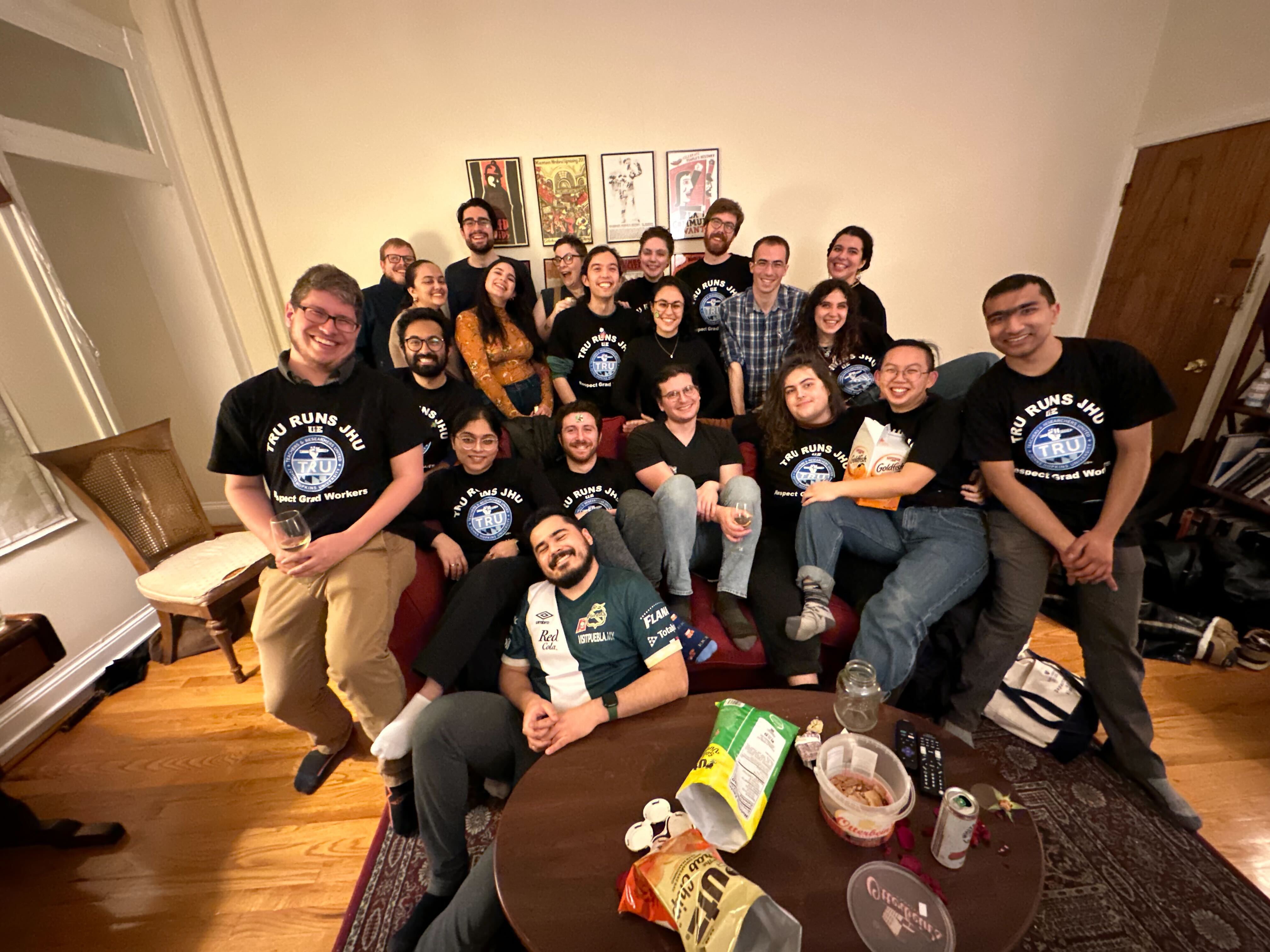 Friends and comrades. Baltimore, MD. February 1, 2023.